The Environment
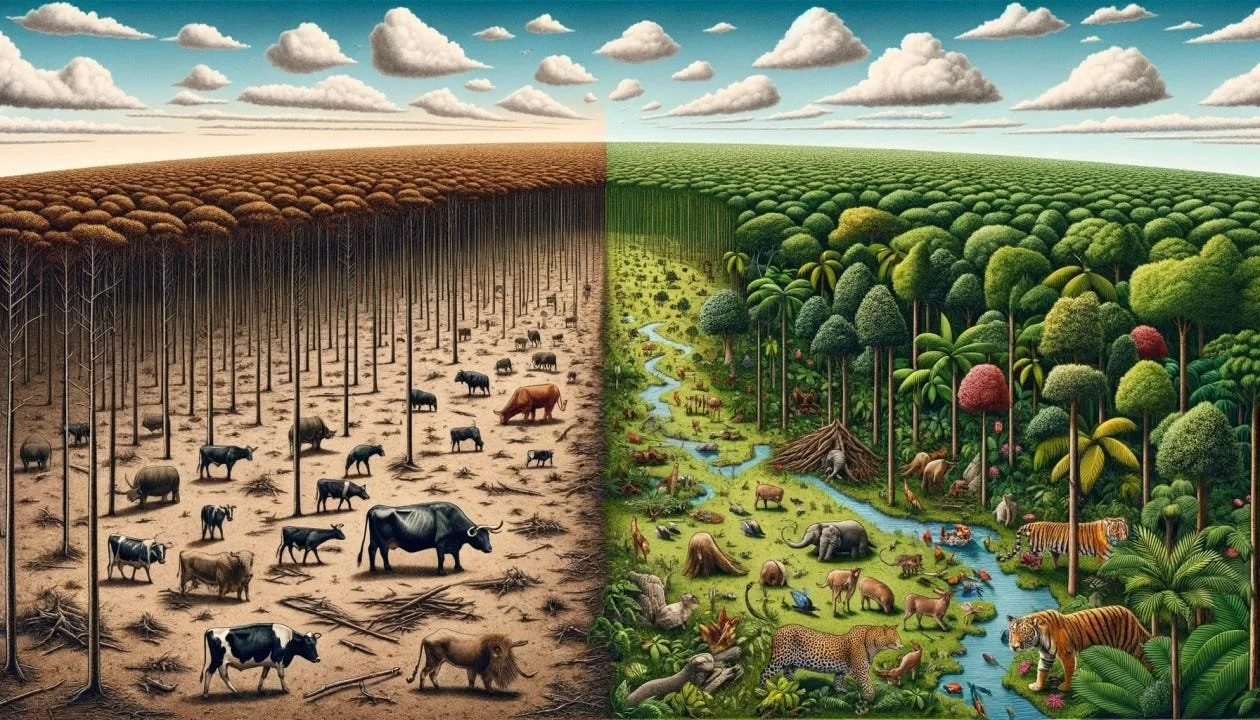
Animal agriculture is a major driver of environmental destruction. It requires vast amounts of land for grazing and growing feed, leading to deforestation and the loss of critical wildlife habitats. Producing animal products uses far more water than plant-based foods; raising a single cow for beef can require thousands of gallons, straining local resources. The industry generates enormous greenhouse gas emissions—methane from cows, nitrous oxide from fertilizers, and carbon dioxide from land clearing—making it a leading contributor to climate change.
Greenhouse Gas Emissions
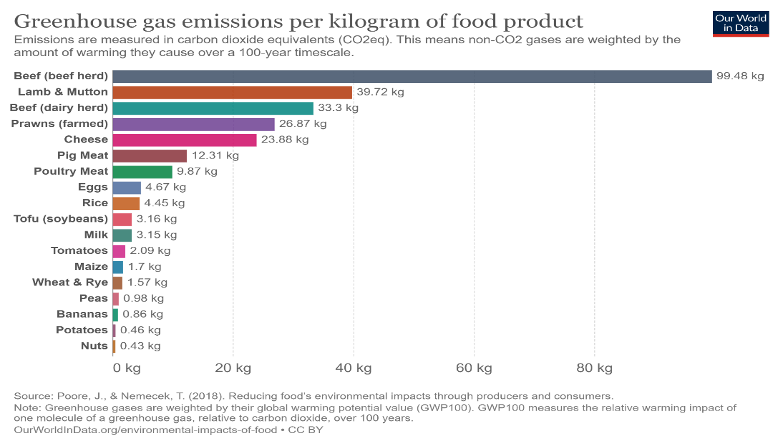
The EnvironmentAnimal Agriculture is responsible for 18% of global greenhouse gas emissions, which is more than the entire transportation sector at 13%. More than all Cars, planes, trains, ships, buses, etc COMBINED.
Ruminants like cows, goats, and sheep produce methane and nitrous oxide through the breaking down of grasses and other feed.
Methane is 22x more potent of a greenhouse gas than carbon, while nitrous oxide is 265 more potent.
With 1.5 billion cows on earth and each of them able to release 500 liters of methane a day means that 750 billion liters of methane are released from cows everyday globally.
Nitrous Oxide is a by product of the waste produced by the animals, which contributes 2.1 gigatons of Nitrous Oxide every year.
This is all while animal agriculture produces 7.1 gigatons of carbon dioxide.
Animal Agriculture uses more around 45% of habitable land globally and about 75% of the current agricultural land, but only gives us 18% of global calories.
Animal agriculture is the leading cause of habitat/biodiversity loss and animal extinction. This is a direct result of clearing natural habitat for farm land dedicated to animal feed or grazing land.
75%-90% of Amazon deforestation is driven by cattle ranching. This is a combination of grazing land and cropland for animal feed, primarily soy.
Around 77% of soy grown globally is fed to livestock for meat and dairy productions.
With current land dedicated to animal feed, we could let 75% of that land go back to natural foliage, and with the remaining 25% feed 2-3 billion more people, growing food for direct human consumption, instead of livestock feed.
Land Use/Deforestation/Habitat Loss
The Environment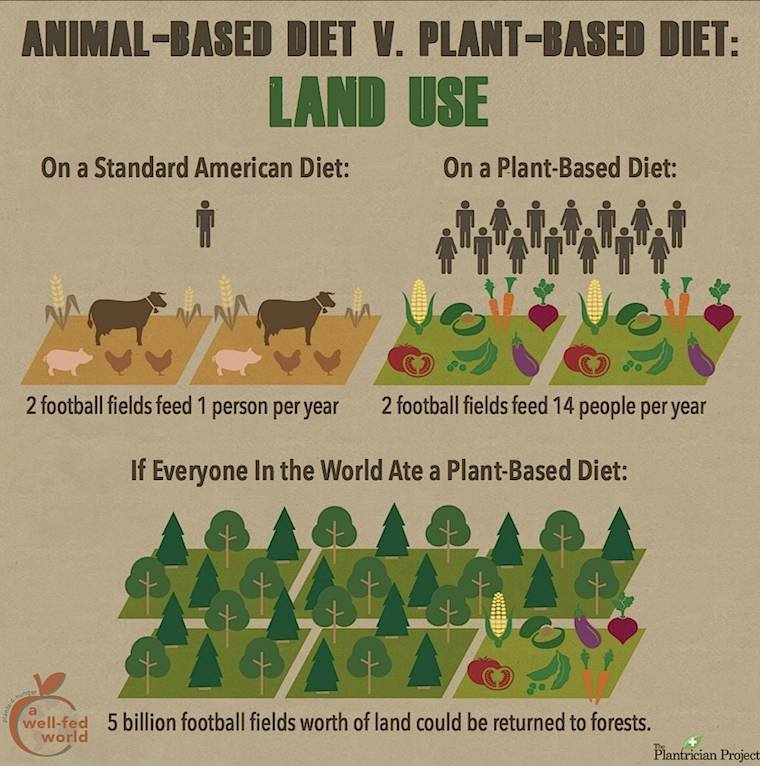
Water Use/Aquifers
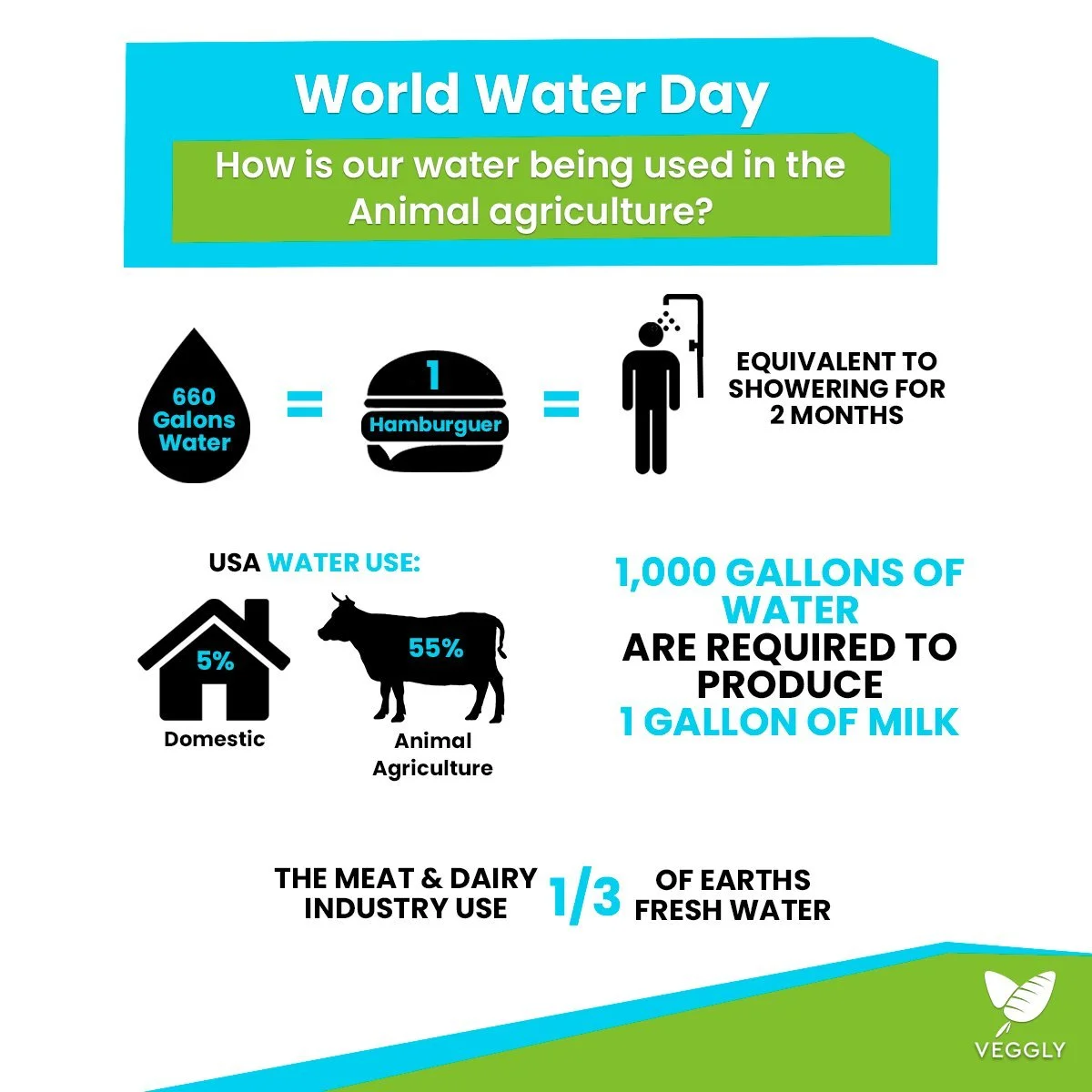
The EnvironmentAnimal agriculture uses a significant amount of water, especially for the production of feed crops and for the animals themselves.
It takes roughly 1,800 gallons of water to produce just one pound of beef, far more than for most plant-based foods.
Waste from animal farms, including manure and urine, can seep into the ground and contaminate aquifers, harming water quality.
Agricultural runoff containing fertilizers, pesticides, and animal waste flows into rivers and groundwater, polluting drinking water sources and damaging aquatic ecosystems.
Large-scale livestock operations often deplete local water supplies, making it harder for surrounding communities and wildlife to access fresh water.
Overgrazing by livestock can reduce soil quality and increase erosion, worsening runoff problems and threatening the integrity of aquifers.
The intensive cultivation of animal feed crops like corn and soybeans requires irrigation and chemical inputs, which further strain water resources and increase the risk of contamination.
High concentrations of livestock waste can lead to algal blooms in lakes and rivers, creating dead zones that devastate aquatic life.